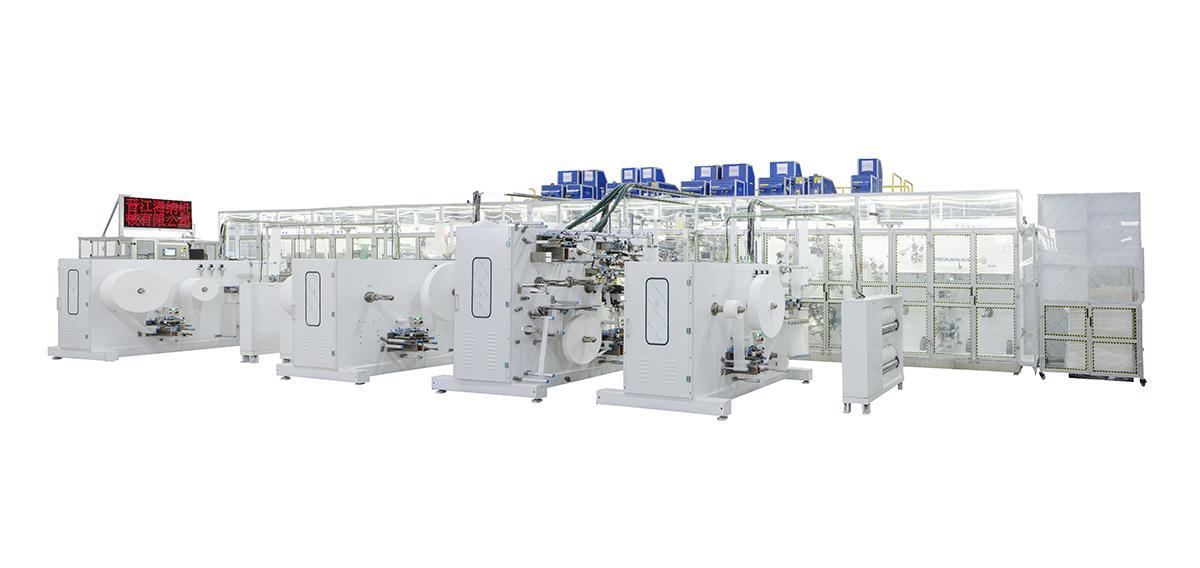
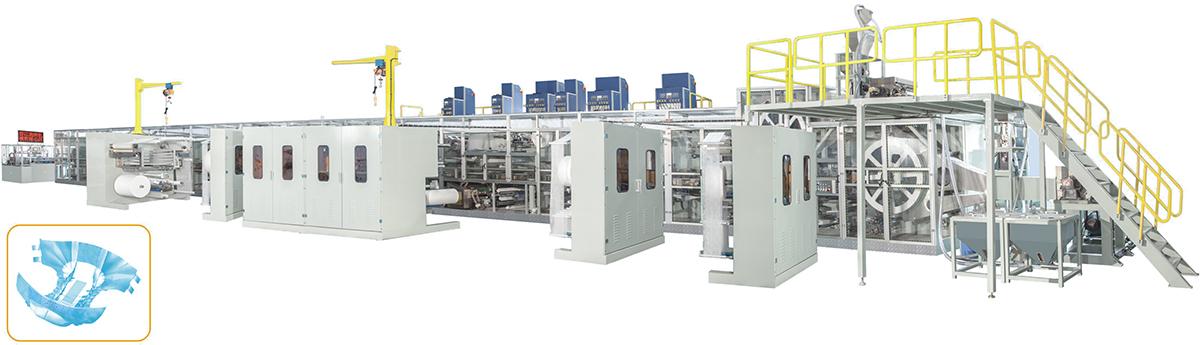
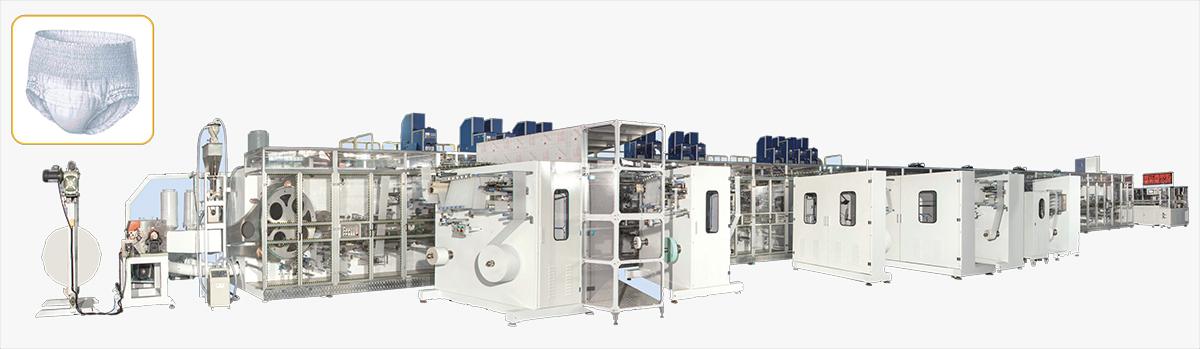
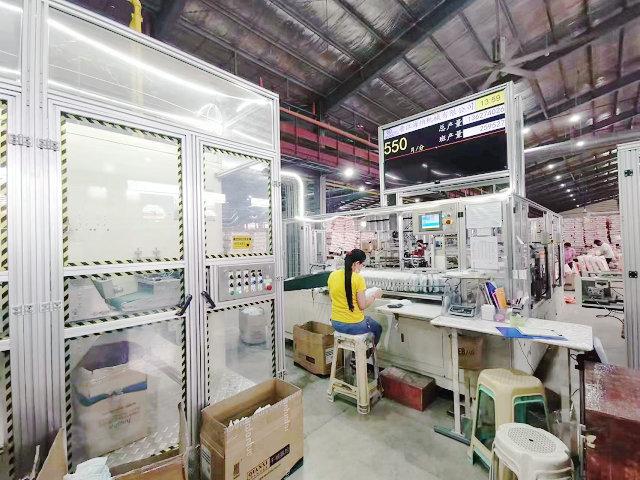
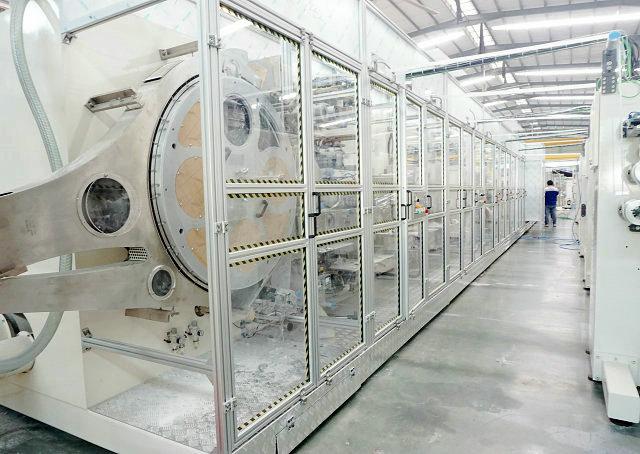
A female diaper machine should be selected only after the buyer defines the finished product, because the phrase may refer to menstrual pants, pull-on protective underwear, or even a sanitary napkin line. Choose a menstrual pants machine when the product has a wearable waist, body panel, absorbent core, leg opening, and side-joining process. Choose a sanitary napkin machine when the product is a flat pad fixed to underwear by release paper, garment adhesive, and optional wings. The correct decision depends on product geometry, material bill, joining method, package format, target size range, and samples that must be demonstrated during FAT.
Decode the Female Diaper Machine Term
Female diaper machine is a search and sourcing term rather than a complete technical definition. A supplier cannot determine the process route from that phrase alone. In one inquiry it may mean disposable menstrual pants worn during a period. In another, it may describe adult pull-on underwear sold for light incontinence. Some buyers also use it for sanitary pads because both products serve feminine hygiene applications. These products do not share one interchangeable production line.
Start by naming the product in operational language. State whether it is a flat adhesive pad, a closed-waist pull-on garment, or an open diaper fastened at the sides. Add a front and back product drawing, unfolded dimensions, target sizes, absorbent core position, waist construction, leg opening, side seam, release paper, wings, and package count. This removes most ambiguity before quotation work starts.
The buyer should also identify the intended user and use condition without making unsupported performance claims. A menstrual product may prioritize a close body fit and controlled core placement. A pad may prioritize panty fastening, release paper application, wing folding, and individual wrapping. An incontinence garment can require a different absorbency target and product geometry. The machine follows these functional differences.
A wearable menstrual product requires a different converting route from a flat sanitary pad.
Define the Finished Product Before the Machine
A useful product definition has four layers. The first is geometry: finished length, width, waist circumference, crotch width, leg opening, core shape, and fold pattern. The second is material construction: topsheet, acquisition layer where used, tissue, fluff pulp, SAP, backsheet, elastic materials, adhesives, release materials, and package film. The third is function: how the product is worn, how it stays in position, where leakage barriers sit, and how it is removed. The fourth is commercial presentation: individual wrap, bag count, coding, and case arrangement.
Each proposed size needs its own controlled drawing and material bill. Do not describe a range only as small, medium, and large. Record which dimensions change and which remain common. On menstrual pants, size changes may affect the core, body web, elastic layout, cutoff, side joining, and folding recipe. On sanitary napkins, changes may affect pad length, core contour, wing geometry, release paper, wrapper cutoff, and stack pattern.
Separate required launch products from possible future products. A machine should be evaluated against products that have approved samples and available materials. Future options can be documented as reserved interfaces or quoted change parts, but they should not be treated as proven merely because the control system can store another recipe.
Compare the Two Converting Routes
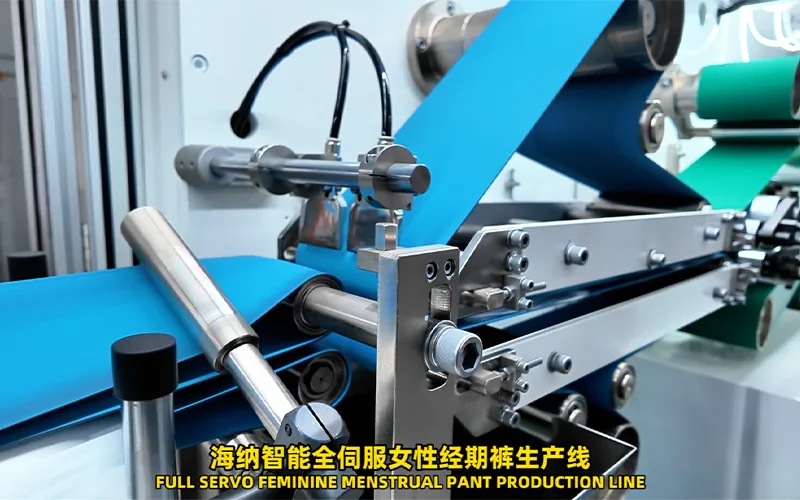
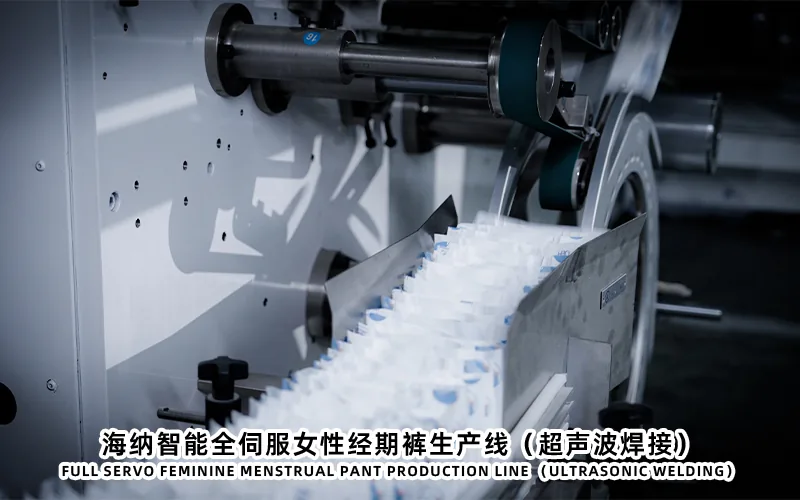
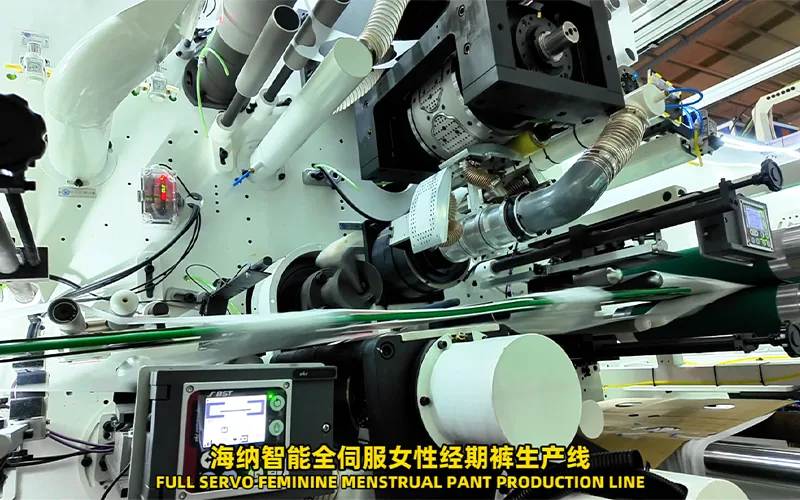
A menstrual pants line creates a wearable chassis. The exact sequence varies by design, but the process can include absorbent core formation, core transfer, topsheet and backsheet lamination, elastic placement, leg contour cutting, body folding, side joining, final cutting, inspection, and product discharge. Stable registration between the absorbent body and the wearable structure matters because errors can affect both fit and leak protection.
A sanitary napkin line creates a flat pad. Its process can include core formation, web lamination, contour cutting, release paper application, wing creation and folding, individual wrapping, final folding, sealing, counting, and delivery to packing. It does not normally need the closed waist and side-joining sequence that defines pull-on menstrual pants.
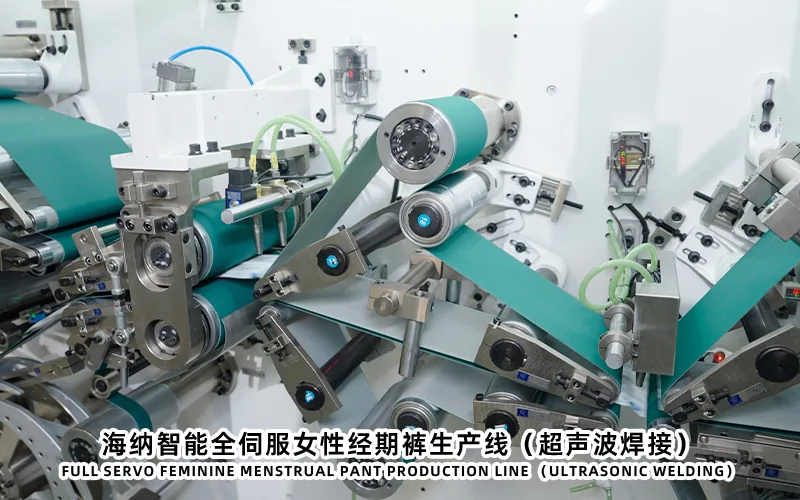
This difference changes more than one module. It affects web widths, unwind count, elastic feeding, tension zones, tooling, ultrasonic or thermal joining where applicable, folding path, inspection points, and downstream handling. A quotation that changes only the product name while keeping an unexplained common module list is not enough evidence of fit.
Product drawings should be traced through every web converting and joining station.
Match Materials to Product Functions
Material names alone do not prove compatibility. For every web, record width, basis weight, thickness, roll diameter, core size, winding direction, surface treatment, elasticity, splice method, and allowed variation. For pulp and SAP, document the supplied form and the product targets used to judge core distribution. For adhesives, define application purpose and supplier recommendations without assuming one temperature or add-on works for every substrate.
Wearable products add material interactions that deserve specific review. Elastic extension, recovery, placement, adhesive bonding, and web softness influence both process stability and fit. Side joining must suit the selected nonwoven layers and the intended opening behavior. Leg-cut waste extraction has to remove trim without pulling the lightweight chassis out of register.
Flat pads have a different material interface. Garment adhesive must be placed consistently and protected by release paper. Wings and wrappers add folding and registration tasks. The buyer should ask how the line detects web absence, splice disturbance, position error, and malformed product, then verify those functions with agreed production materials.
Use a Product Selection Matrix
Decision evidence
Menstrual pants route
Sanitary napkin route
Buyer verification
How the product is worn
Pull-on waist and leg openings
Flat pad fixed inside underwear
Approved front back and unfolded drawings
Positioning system
Waist body panels and elastic geometry
Garment adhesive release paper and optional wings
Bill of materials and functional sample
Joining and cutting
Leg contour body fold side join and final cut
Pad contour wing fold wrapper cut and seal
Process flow marked against product layers
Size change
May affect core chassis elastic and joining recipe
May affect pad core wings release paper and wrapper
Change-part list and demonstrated changeover
Downstream handling
Folded garment counting stacking and bagging
Individual wrapping folding counting and bagging
Complete line boundary and interface test
Use this matrix to reject terminology-based shortcuts. If the reference sample has a waist and leg holes, the quote must explain chassis formation and side joining. If the sample uses garment adhesive and release paper, the quote must explain pad release and wrapping. Where a hybrid product includes unusual layers or opening features, require a specific process review instead of forcing it into either standard description.
Prepare Reference Samples and Drawings
Send multiple intact reference samples, not only photographs. Mark the front, back, machine direction if known, product centerline, core boundary, elastic zones, seals, perforations, tapes, release papers, and wrapper opening. Include samples from more than one package so the supplier can distinguish intended construction from normal material variation.
Convert the sample into a controlled requirement sheet. List critical dimensions and the measurement method for each one. Define visual defects such as exposed core, missing elastic, open side seam, displaced release paper, damaged wrapper, or incorrect fold. The buyer and supplier should agree which characteristics are critical, which are adjustable process targets, and which require a material supplier decision.
HAINA can use a buyer's samples, material information, and drawings to review the suitable menstrual pants machine configuration. The review should still end with a written scope, material trial plan, and acceptance method rather than relying on a product label.
Reference samples become useful when dimensions defects and test methods are documented.
Build a Verifiable RFQ Package
RFQ evidence checklist
Use an unambiguous product name and include annotated physical samples.
Provide a controlled drawing and bill of materials for every launch size.
State package style, count, coding, bagging, and case-packing boundary.
List buyer-supplied utilities, materials, labor, lifting, and site conditions.
Ask for a station-by-station process description tied to the product layers.
Request the included change parts, optional modules, exclusions, and interfaces.
Define the FAT materials, run sequence, defect categories, and data records.
Separate design speed from stable working speed and agreed acceptance values.
A comparable RFQ also defines responsibility. State who sources trial materials, approves drawings, provides packaging film, supplies quality instruments, witnesses FAT, arranges installation utilities, and signs sample acceptance. Without these owners, two quotations may appear similar while assigning important work to different parties.
Ask every supplier to identify assumptions and exceptions in the same format. One supplier may include core formation and waste collection but exclude dust extraction. Another may include a product counter but not the automatic bagger. Normalize these boundaries before comparing commercial terms.
Confirm the FAT Boundary
Factory acceptance should prove the selected process against agreed samples and materials. Begin with document checks, guards, utilities, threading diagrams, recipes, alarms, and inspection functions. Run each launch size under defined conditions. Record actual operating speed, duration, stops, waste categories, quality results, changeover actions, and downstream interruptions. Do not treat design speed as an automatic acceptance value.
Acceptance must cover the features that separate the two equipment types. For menstrual pants, review core position, elastic placement, leg contour, side joining, folding, and opening behavior. For sanitary napkins, review pad contour, wing fold, garment adhesive, release paper, individual wrap, seals, and release from tooling. Defect definitions and sampling frequency should be agreed before the test begins.
Close FAT with an open-item list. Assign an owner, evidence requirement, and due condition to each item. Record approved samples and recipes as controlled references for installation. This approach makes the original terminology question irrelevant because the delivered evidence is tied to the actual product.
FAT should demonstrate the defined product route instead of validating a vague machine name.
Frequently Asked Questions
Is a female diaper machine the same as a menstrual pants machine?
Sometimes buyers use the terms that way, but female diaper machine is not precise. Confirm whether the sample is a pull-on menstrual garment, an incontinence product, or a flat sanitary pad before selecting equipment.
Can one line make both menstrual pants and sanitary napkins?
Normally they require different primary converting routes because the chassis, joining, elastic, fastening, folding, and wrapping processes differ. A supplier should prove any claimed shared scope station by station.
What should be sent before requesting a quotation?
Send intact samples, controlled drawings, material data, size range, package format, quality criteria, site conditions, and the required downstream automation boundary.
How should future sizes be handled?
Identify them separately from launch sizes. Request the required tooling, web-width limits, controls, interfaces, and a future trial plan without treating an untested recipe as proven output.
Conclusion
Selecting between a female diaper machine and a sanitary napkin machine starts with the product, not the search phrase. A waist, leg opening, and side-joined chassis indicate a menstrual pants route, while garment adhesive, release paper, wings, and individual wrapping indicate a sanitary napkin route. Freeze samples, drawings, materials, sizes, packaging, and acceptance criteria; then require every proposed module to trace back to those requirements. That evidence gives procurement, engineering, quality, and the supplier one testable definition of the machine being purchased.