Adult & Baby Diaper Machine,Sanitary Napkins Production Line Blog
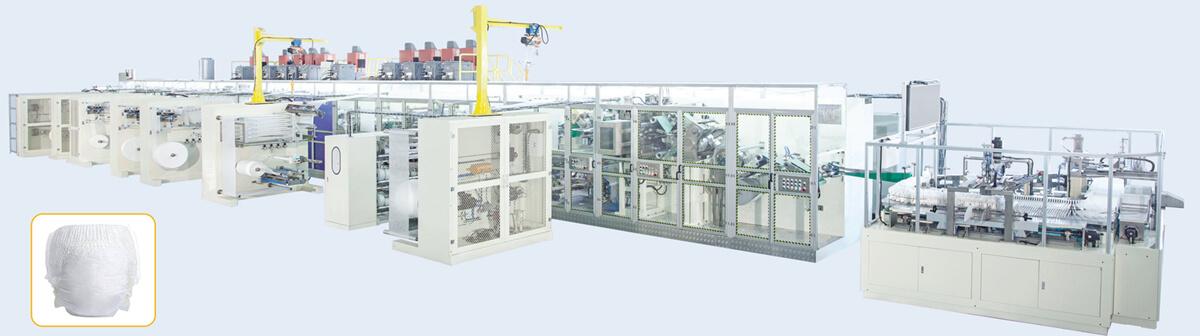
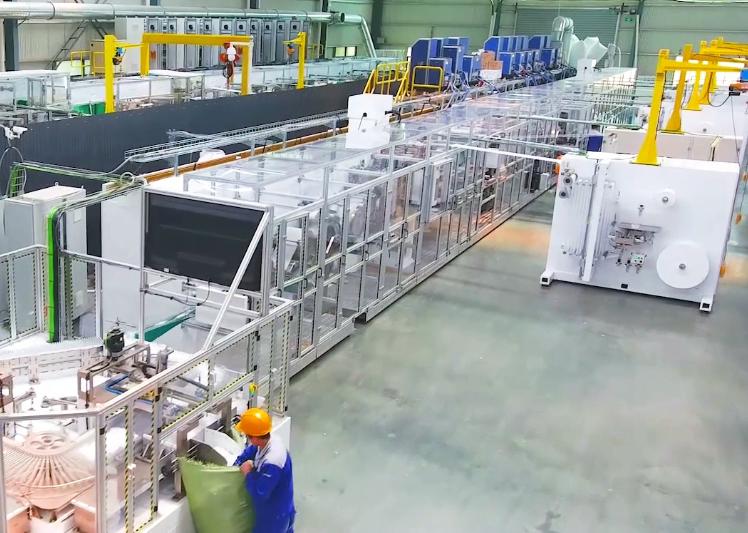
Integrate a fully automatic diaper machine main line and auto bagger through rate balance, transfer control, signal handshakes, recipes, recovery, and FAT.
A fully automatic diaper machine becomes a complete production system only when the converting main line and auto bagger share a defined product transfer, rate balance, operating state, stop response, recipe identity, reject strategy, safety boundary, and quality release method. Matching two headline speeds is not enough. The buyer should specify every interface signal and physical condition, decide what happens during a brief or extended downstream interruption, and test the combined line with approved products and bags. Successful integration is measured by stable quality-released packages and controlled recovery, not by an isolated peak at either machine.
Define the Main Line and Bagger Boundary
Draw a boundary diagram showing the last controlled function of the converting line and the first controlled function of the bagger. Include product discharge, counting, turning, stacking, compression, transfer, bag opening, insertion, sealing, coding, inspection, rejection, and case handling if present. Assign mechanical, electrical, pneumatic, software, guarding, and performance responsibility at every interface.
Clarify whether one supplier owns both machines or whether separate suppliers must cooperate. A shared project still needs one integration owner with authority to manage drawings, signal lists, change control, FAT, and site issues. Otherwise a dropped stack, lost count, or repeated stop can be blamed on the boundary without a controlled investigation.
Record battery limits for power, air, vacuum, extraction, network, floor, access, lifting, guarding, and emergency circuits. Define who supplies cables, connectors, transfer frames, sensors, accumulation, test products, packaging film, printed bags, coding supplies, and quality instruments. These practical details can delay commissioning even when both machines are mechanically complete.
Interface rule: Every physical handoff must have a matching control-state definition and a named owner. A product can cross the boundary only when both sides agree that transfer is permitted.
The integration boundary should identify each product, signal, utility, safety, and documentation handoff.
Balance Products Stacks Bags and Cases
Main-line output is counted in individual products, while bagger demand is governed by products per stack, stacks per bag, bags per minute, and interruptions for film or case handling. Build a rate model for every approved SKU and package count. Include the effect of folded thickness, compression, bag size, sealing time, discharge, coding, and inspection.
Distinguish design speed, demonstrated stable working speed, expected plant operating speed, and a contractual acceptance value. A bagger can have a high nominal cycle rate but still constrain a bulky product or large count. The converting line can also produce intermittent spacing that challenges stacking even when the average product rate appears suitable.
Identify the limiting station for each format and define operating margin without inventing a universal percentage. Review changeover duration and material replenishment. Bag film changes, label or ink replacement, case supply, and quality sampling can interrupt the downstream process. The staffing and layout plan must support these tasks without blocking the main line.
Design a Controlled Product Transfer
The transfer must preserve product orientation, count, spacing, fold, and cleanliness. Map where the product is gripped, supported, accelerated, turned, counted, and compressed. Soft or bulky products can rebound or lean; light products can move under uncontrolled airflow. Guides and belts should control the product without marking, tearing, or disturbing components.
Define the response to a missing, doubled, damaged, or rejected product. If upstream inspection removes an item, the stacker must maintain count or discard the affected group according to approved logic. A count should not silently cross a stop or recipe change. Establish purge locations and a physical method to prevent uncertain products from rejoining accepted flow.
Access matters at the interface because jams often occur where machines meet. Guards, doors, platforms, lighting, and isolation should support safe clearing and inspection. Check that removed products and packaging materials have identified containers and that operators do not reach across independent moving zones.
A controlled transfer preserves orientation and count while allowing safe fault recovery.
Specify the Control Handshake
Create a signal list with name, direction, electrical or network form, normal state, timing, failure behavior, and test method. Common information can include ready, run permission, running, speed reference, slow request, stop request, fault, emergency condition, product present, count state, accumulation level, recipe identity, and reset permission. The actual list should follow the agreed architecture.
Define a state model rather than isolated bits. Startup may require both machines safe, reset, correctly configured, and ready before transfer begins. A downstream warning can request reduced output; a critical condition can stop transfer; an emergency state follows the approved safety design. Recovery should require deliberate confirmation so old products or counts are not released unexpectedly.
Time synchronization supports diagnosis. Align controller, HMI, inspection, and bagger event clocks through an approved method where possible. Record which system is the source of production and downtime events. Protect network addressing, software versions, access roles, and backups. No supplier should change an interface parameter without a controlled record and verification.
Manage Stops Accumulation and Restart
Model short and extended stops. During a brief bagger interruption, accumulation may continue until a level requests main-line slowdown or stop. During a longer fault, products in transfer, stacks, and open bags may become uncertain. Define where they go, how they are identified, and what inspection is required. Accumulation is useful only when its capacity, product effect, and release sequence are understood.
Restart should clear stale states and confirm recipe, count, product path, guards, materials, and quality. Decide whether the converting line starts first, the bagger starts first, or a coordinated sequence applies. The first products may need automatic or manual segregation until stable timing and package quality are demonstrated.
Test disturbances instead of only a normal run. Include bag-film replenishment, downstream jam, missing product, upstream reject, sensor fault, normal stop, emergency recovery under the approved procedure, utility interruption where safe, and recipe change. Record stop source, response time, affected material, operator actions, and first accepted package.
Identify the stop source and freeze the affected product boundary.
Make both machine zones safe under the defined procedure.
Clear or segregate products, stacks, bags, and counts with traceability.
Confirm mechanical path, controls, recipe, packaging material, and guards.
Restart through the approved handshake and hold initial packages.
Measure product and package, then release normal production.
Stop and restart logic should control every product between conversion and sealed packaging.
Coordinate Recipes Inspection and Traceability
A product recipe and a package recipe must refer to the same approved SKU. Define the shared identifier, who selects it, how mismatches are prevented, and which parameters remain local. Product size, stack count, bag count, film, print, code, seal conditions, inspection limits, and case pattern should be checked before release.
Inspection responsibilities need a complete map. Upstream systems may detect component position or presence; downstream systems may verify count, bag seal, code, or package appearance. Decide how each reject is physically removed and confirmed. Test reject bins, full-bin alarms, sensor validation, and the treatment of a failed reject.
Production records should connect input material lots, line recipe, quality samples, packaging materials, alarms, rejected quantities, and released packages according to the buyer's traceability process. HAINA can review a fully automatic diaper machine project with its intended downstream boundary, but the buyer should define required data retention and plant-system integration.
Use an Integration Responsibility Matrix
Interface
Main line responsibility
Bagger responsibility
Joint verification
Product handoff
Deliver approved orientation spacing and state
Accept control count and transfer without damage
Observe boundary under normal and disturbed flow
Rate control
Respond to slow or stop requests as agreed
Report capacity state and downstream availability
Test every SKU and package count
Recipe identity
Provide or confirm product identifier
Confirm matching package program
Challenge a deliberate mismatch safely
Reject handling
Signal missing or rejected product state
Protect count and remove affected stack or bag
Insert controlled known events
Fault recovery
Hold and restart product discharge predictably
Clear products and reset counts predictably
Record first accepted package after restart
Test the Integrated Line at FAT
Agree whether FAT covers a physically integrated system or separate machine tests followed by a site integration test. Whenever the complete equipment can be assembled, use production materials and bags to witness sustained operation, package quality, changeover, replenishment, inspection, reject handling, and stop recovery. If a function cannot be tested until site, list it as a planned acceptance item with prerequisites.
Define the calculation boundary for quality-released packages. Record scheduled time, operating periods, stops by source, products produced, rejects, packages produced, package rejects, and held material. Do not count loose good products as completed output when the contract concerns an integrated line. Review whether upstream and downstream records agree.
Close FAT with final interface drawings, signal list, state description, software versions, backups, manuals, spare list, training, and open points. Repeat critical tests after any control or mechanical change that affects the boundary. Site acceptance should reconfirm utilities, layout, guarding, network, product materials, and local operating procedures.
Include manual operating modes in the test. Maintenance may need to jog a conveyor, discharge a stack, index film, or verify a sensor, but independent manual commands must respect safe states and should not corrupt production counts. Define the handback from manual to automatic mode and make operators confirm that no product remains in an unknown state.
Review communication loss between controllers. The safe and quality-protective response should be defined for a broken network, missing heartbeat, stale speed reference, or inconsistent recipe identity. Test recovery without allowing both systems to assume the other has already cleared the interface.
Confirm that event records from both machines can be placed on one timeline for fault review and final reporting.
An integrated FAT measures completed packages and verifies controlled response to disturbances.
Main Line and Auto Bagger Questions
Can matching machine speeds guarantee integration?
No. Product spacing, stack count, bag cycle, transfer, stops, replenishment, recipes, and quality release determine usable system performance.
How much accumulation is required?
There is no universal capacity. Model expected interruption types, product behavior, floor space, rate response, and the quality risk of holding products.
Who should own the interface between two suppliers?
Name one integration owner and document each supplier's mechanical, electrical, software, safety, testing, and support responsibilities.
What output should an integrated FAT count?
Use quality-released packages under the agreed boundary, while separately recording loose products, rejects, held material, stops, and planned test events.
Conclusion
Main-line and auto-bagger integration is a controlled production system, not a connection between two speed ratings. Define the physical boundary, state handshake, product and package rate model, transfer behavior, stop response, recipes, inspection, and ownership. Test normal production and realistic disturbances with approved materials. The strongest acceptance evidence is traceable, quality-released packaging plus a repeatable recovery process.